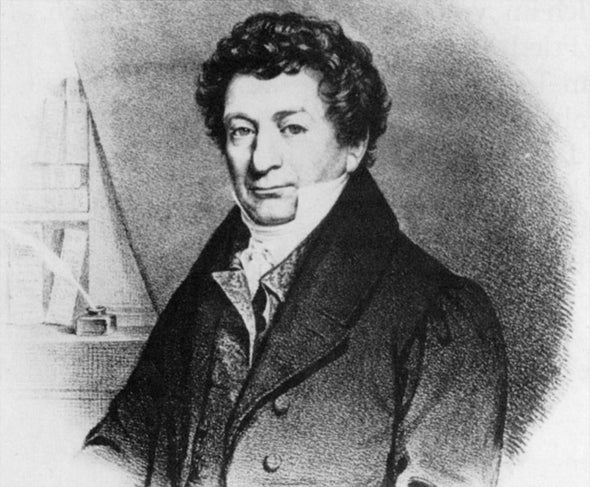
We have all heard of morphine, a hypnotic drug derived from poppy extract, which is prepared from raw opium. It allows doctors to use it to relieve pain but within certain limits so that the patient does not reach the stage of addiction. Morphine was first detected by Austrian chemist Frederick Sertner in 1804, who isolated morphine from raw opium in the first precedent of isolating an effective plant. Sertner launched the property Morpheus, the god of dreams of the Greeks.
Morphine pills work directly on the central nervous system and reduce the feeling of acute or chronic pain
Born in Prussia, in 1783, Sertner died at the age of 15 and left him without a means of support.
In 1803, Frederick was a young man of 20 who trained on pharmacy practice after receiving a limited education. However, through diligent research, he succeeded in isolating and extracting morphine crystals from opium, which he described as the "sleeping agent" of opium and hence derived his name from the name of the god of dreams. Sertner's discovery had a great impact, enabling doctors to prescribe morphine in specific and regulated doses.
Sertner's experiments were very discreet, at night alone, and mice and stray dogs were introduced in experiments to monitor the effects of morphine on live animals. To determine a suitable dose for humans, Sertner recruited some of his friends to try morphine on them in a series of controlled trials. He himself participated in the trials and watched and recorded the effects of the drug during increasing doses. Experiments have revealed that half of the morphine cause a feeling of happiness along with a sense of dizzyness.
The second dose causes drowsiness and excessive fatigue. The third dose causes confusion and loss of concentration followed by falling into a deep sleep, followed by suffering from nausea and headache when waking up. Although his friends refused to continue the experiments, Sertner continued to experiment with the drug for months without realizing that his medication was causing severe addiction.
Sertner continued to pursue his career in pharmacy, and in 1806 he published two articles on his morphine experiences, but was largely ignored. By 1809 he became a licensed pharmacist and owner of a private company. He published a report on his experiences with morphine for the third time, describing his findings in much greater depth. The report received considerable attention and earned an honorary doctorate from the universities of Gina, Marburg, Berlin, St. Petersburg, Batavia, Paris and Lisbon. He was also awarded the Montaigne Prize for his achievement in isolating morphine from opium "useful to humanity". Despite these awards and awards, some factions in the German medical community have refused to acknowledge the importance of Sertner's discovery and have been critical of him and underestimate his research. Scientific journals did not welcome the publication of his writings, although many of his theories and conclusions later proved correct. For example, during the cholera epidemic, he pointed out that the cause of the epidemic was a living organism.
Despite the importance of his research, Sirtorner suffered from chronic depression and judged himself to fail because he could not develop a safe and effective dwelling that would kill the pain without making the patient unconscious. He withdrew from social life and was suffering from thyroid pain and was dependent on morphine until the side effects became unbearable He died at age 58.
But medical historians have returned to Sertner's right and recognized the importance of his work, especially in the light of the constraints he faced, his research was accomplished with a superficial medical background and limited resources, a guide and testimony to his genius and passion and extraordinary abilities.
We have all heard of morphine, a hypnotic drug derived from poppy extract, which is prepared from raw opium. It allows doctors to use it to relieve pain but within certain limits so that the patient does not reach the stage of addiction. Morphine was first detected by Austrian chemist Frederick Sertner in 1804, who isolated morphine from raw opium in the first precedent of isolating an effective plant. Sertner launched the property Morpheus, the god of dreams of the Greeks.
Morphine pills work directly on the central nervous system and reduce the feeling of acute or chronic pain
Born in Prussia, in 1783, Sertner died at the age of 15 and left him without a means of support.
In 1803, Frederick was a young man of 20 who trained on pharmacy practice after receiving a limited education. However, through diligent research, he succeeded in isolating and extracting morphine crystals from opium, which he described as the "sleeping agent" of opium and hence derived his name from the name of the god of dreams. Sertner's discovery had a great impact, enabling doctors to prescribe morphine in specific and regulated doses.
Sertner's experiments were very discreet, at night alone, and mice and stray dogs were introduced in experiments to monitor the effects of morphine on live animals. To determine a suitable dose for humans, Sertner recruited some of his friends to try morphine on them in a series of controlled trials. He himself participated in the trials and watched and recorded the effects of the drug during increasing doses. Experiments have revealed that half of the morphine cause a feeling of happiness along with a sense of dizzyness.
The second dose causes drowsiness and excessive fatigue. The third dose causes confusion and loss of concentration followed by falling into a deep sleep, followed by suffering from nausea and headache when waking up. Although his friends refused to continue the experiments, Sertner continued to experiment with the drug for months without realizing that his medication was causing severe addiction.
Sertner continued to pursue his career in pharmacy, and in 1806 he published two articles on his morphine experiences, but was largely ignored. By 1809 he became a licensed pharmacist and owner of the company